Build a Premium Indoor Pool Environment

Custom Indoor Pool Enclosures by COVERSin play

  • Engineered for Structural Performance in Canada
  • Durable Materials for Long-Term Reliability
  • Smooth, Quiet System Operation
  • Four-Season Indoor Pool Enjoyment
  • 20-Year Structural Warranty
Roof System

How Much Does It Cost to Build an Indoor Pool?

One of the most common questions homeowners ask is: how much does it cost to build an indoor pool? The answer depends largely on the construction approach, enclosure type, and environmental control systems required.


Conventional Indoor Pool Construction

With traditional indoor pool construction, managing humidity is one of the largest expenses. A fully enclosed indoor swimming pool in a house typically requires a dedicated dehumidification and HVAC system to control moisture levels and prevent structural damage. Without a dehumidification system, base construction costs may range from approximately $150,000 to $250,000 depending on size and layout. However, adding a professional-grade dehumidification system can increase the total investment significantly, often pushing the indoor pool construction cost into the $250,000 to $450,000 range or more.

These mechanical systems are not optional in conventional builds, as excess humidity can lead to condensation, corrosion, and long-term structural issues.


Indoor Pool Enclosure Alternative

An engineered indoor pool enclosure system offers a more efficient solution. Because retractable and fixed pool enclosures allow controlled ventilation and natural airflow when needed, a dedicated dehumidification system is not required. This represents one of the largest cost-saving advantages when planning to build an indoor pool.

With a Covers in Play enclosure system, typical costs may range from approximately $90,000 to $225,000, depending on project size and structural specifications, significantly reducing the overall cost to build an indoor pool compared to conventional fully sealed construction.

By eliminating the need for complex mechanical dehumidification systems, homeowners can:

  • Reduce upfront installation costs
  • Lower long-term energy expenses
  • Minimize ongoing maintenance requirements
  • Improve overall energy efficiency

Planning for Indoor Pool Construction Cost

To accurately estimate your indoor pool construction cost, it’s important to evaluate:

  • Pool size and depth
  • Structural enclosure type (fixed vs retractable)
  • Climate considerations
  • Ventilation design
  • Architectural integration

Proper planning ensures you select a system that supports year-round use while optimizing budget efficiency.

If you're considering adding an indoor pool in a house, our team can help assess your space and provide guidance on enclosure options that balance performance, durability, and long-term cost savings.

Cost to Build an Indoor Pool: Conventional Materials

From an architectural perspective, an indoor swimming pool in a house can be designed to integrate seamlessly with the rest of the home. However, when homeowners build an indoor pool using conventional construction methods, the long-term engineering challenges—particularly heating, ventilation, and humidity control—are often underestimated.

Traditional indoor pool construction typically relies on moisture-resistant drywall, cement board, and fully sealed structural systems to manage constant humidity levels. Even when paired with mechanical dehumidification systems, prolonged exposure to warm, moisture-heavy air can gradually deteriorate materials over time. This can lead to mold risk, structural damage, and rising indoor pool construction cost due to ongoing repairs and maintenance.

Improper humidity control also increases evaporation, requiring greater energy consumption to maintain stable air and water temperatures. Because conventional indoor swimming pool in a house designs depend heavily on mechanical systems, operating expenses can escalate quickly—driving the true cost to build indoor pool projects far beyond the initial construction estimate.

Fortunately, there is a more efficient solution. Advanced pool enclosure systems by Covers in Play offer cost-effective and durable alternatives, reducing reliance on complex dehumidification systems while providing controlled ventilation and long-term structural protection. By using engineered enclosure materials designed for moisture performance and longevity, homeowners can significantly lower indoor pool construction cost while creating a strong, low-maintenance, year-round indoor pool environment.

Indoor Pool Construction Cost: A Smarter Enclosure Solution

When you build an indoor pool, the materials and structural system you choose directly impact long-term durability, energy efficiency, and overall operating costs. Many contractors rely on conventional materials that can lead to costly maintenance and repairs over time. Covers in Play offers engineered aluminum indoor pool enclosures a smarter, more cost-effective solution for homeowners looking to add an indoor swimming pool in a house.

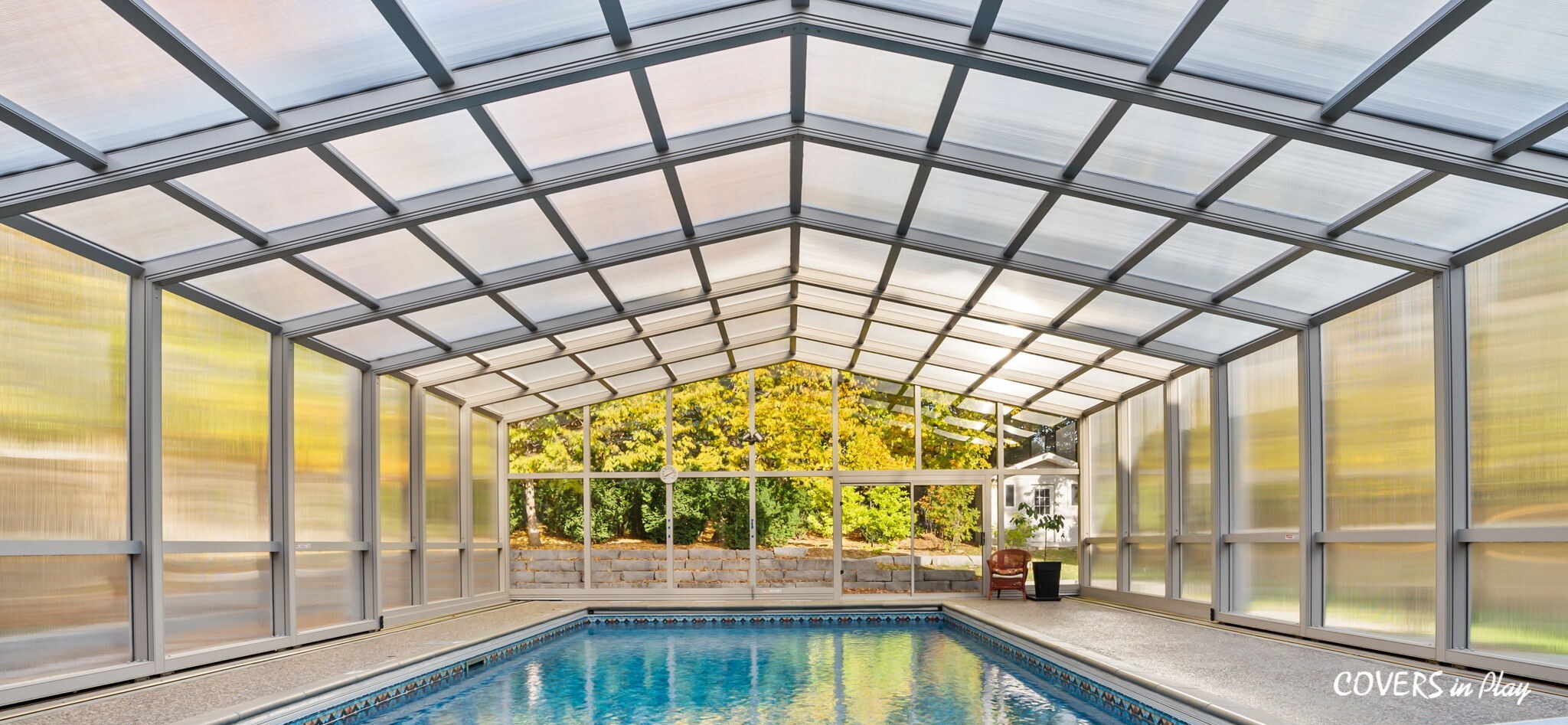
Our aluminum indoor pool enclosures provide a clean, architectural appearance similar to a glass solarium while integrating seamlessly with both new construction and existing homes. Unlike wood framing or moisture-resistant drywall, aluminum will not rot, warp, or support mold growth. This results in a stronger, longer-lasting indoor pool structure with reduced long-term maintenance requirements.

A major advantage when planning the cost to build indoor pool projects is moisture management. Traditional indoor pool construction often requires a large, expensive dehumidification system to control humidity. In contrast, our enclosure systems are designed to allow natural ventilation when needed, significantly reducing reliance on mechanical dehumidification. In many cases, no full-scale dehumidification system is required lowering both upfront and ongoing indoor pool construction cost.

The indoor pool enclosures cost is considerably more affordable compared to conventional fully sealed indoor pool builds. Depending on size and specifications, the cost to build an indoor pool using an aluminum enclosure system typically ranges from approximately $90,000 to $225,000. Even when incorporating a small exhaust or supplemental system, expenses remain a fraction of traditional indoor pool construction. On average, an indoor pool enclosure may range between $70 to $120 per square foot, making it one of the most efficient and budget-conscious approaches available.

In addition to cost savings, aluminum pool enclosures eliminate many of the long-term humidity issues associated with conventional builds. High-performance glazing panels allow natural sunlight while minimizing moisture buildup. Optional operable windows, sliding glass doors, or retractable roof sections provide enhanced airflow during warmer months allowing homeowners to enjoy the benefits of an indoor pool in a house while maintaining flexibility and comfort year-round.

Build your indoor pool the right way efficient, durable, and cost-effective. Contact Covers in Play today to explore enclosure options tailored to your project.

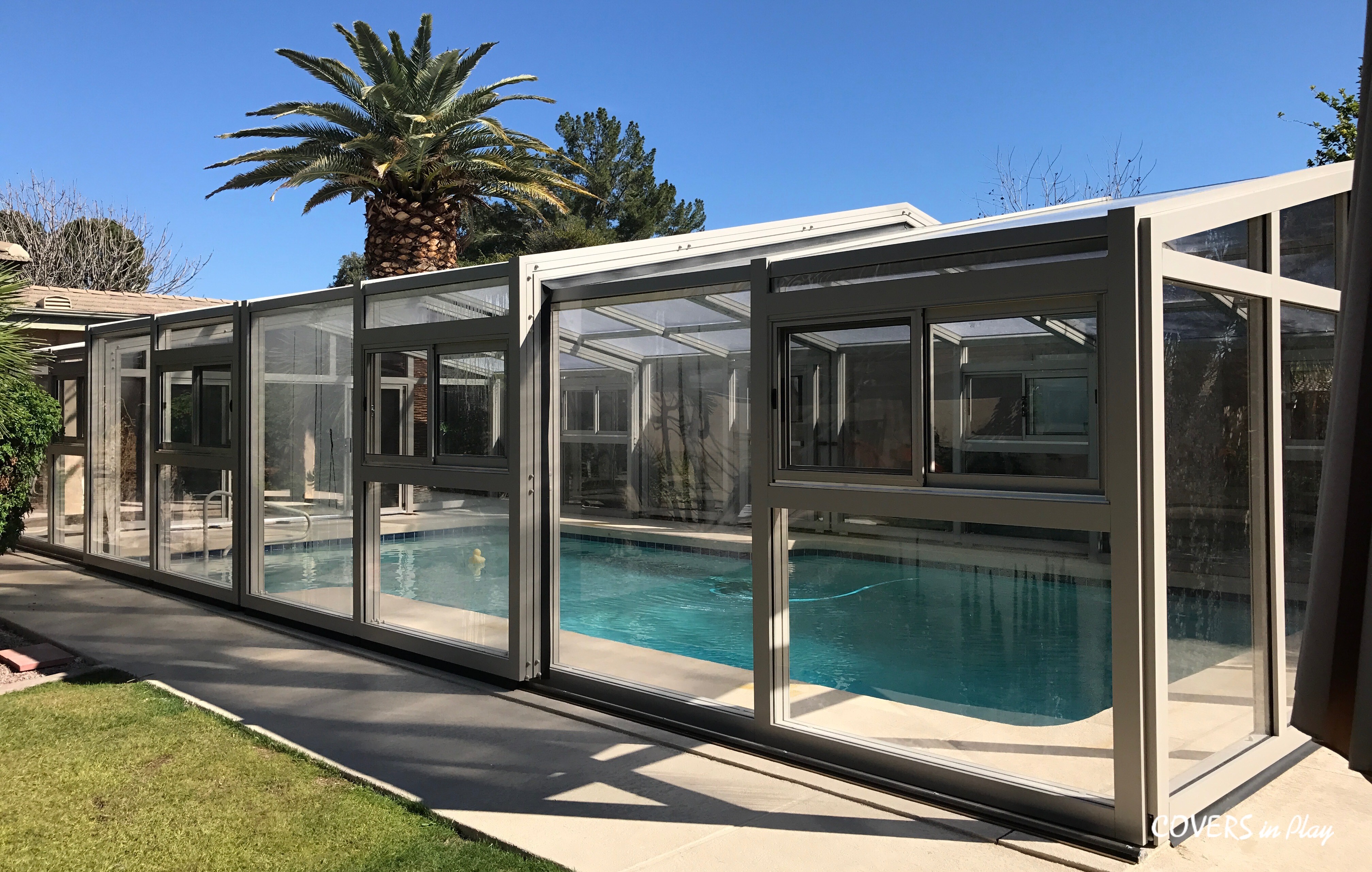
Glass swimming pool enclosure with sliding doors and clear panels surrounding an indoor residential pool

Outdoor Pool Now, Indoor Comfort Later

For many homeowners, the cost to build an indoor pool upfront can feel significant. A smart alternative is to construct an outdoor pool now and plan for a future pool enclosure. With proper planning from the start, you can enjoy your pool immediately while preparing for year-round use down the road.

The key is early structural planning. Determining the full footprint of the future enclosure allows you to install the appropriate footings and foundation supports when the pool deck is poured. By planning ahead, the transition from outdoor pool to enclosed indoor swimming pool becomes seamless. This approach allows the overall investment to be spread out over time while protecting long-term flexibility.

When you’re ready to install a pool enclosure, your pool transforms into a controlled, four-season environment. During colder months, the enclosure remains closed to maintain warmth and comfort. In transitional seasons, a retractable pool enclosure can be partially opened to regulate temperature and airflow. In the summer, the system opens fully delivering the experience of an outdoor pool while maintaining the option to close it if weather conditions change.

Building in phases provides financial flexibility, structural efficiency, and long-term value all while preserving the ability to create a year-round pool environment when the time is right.

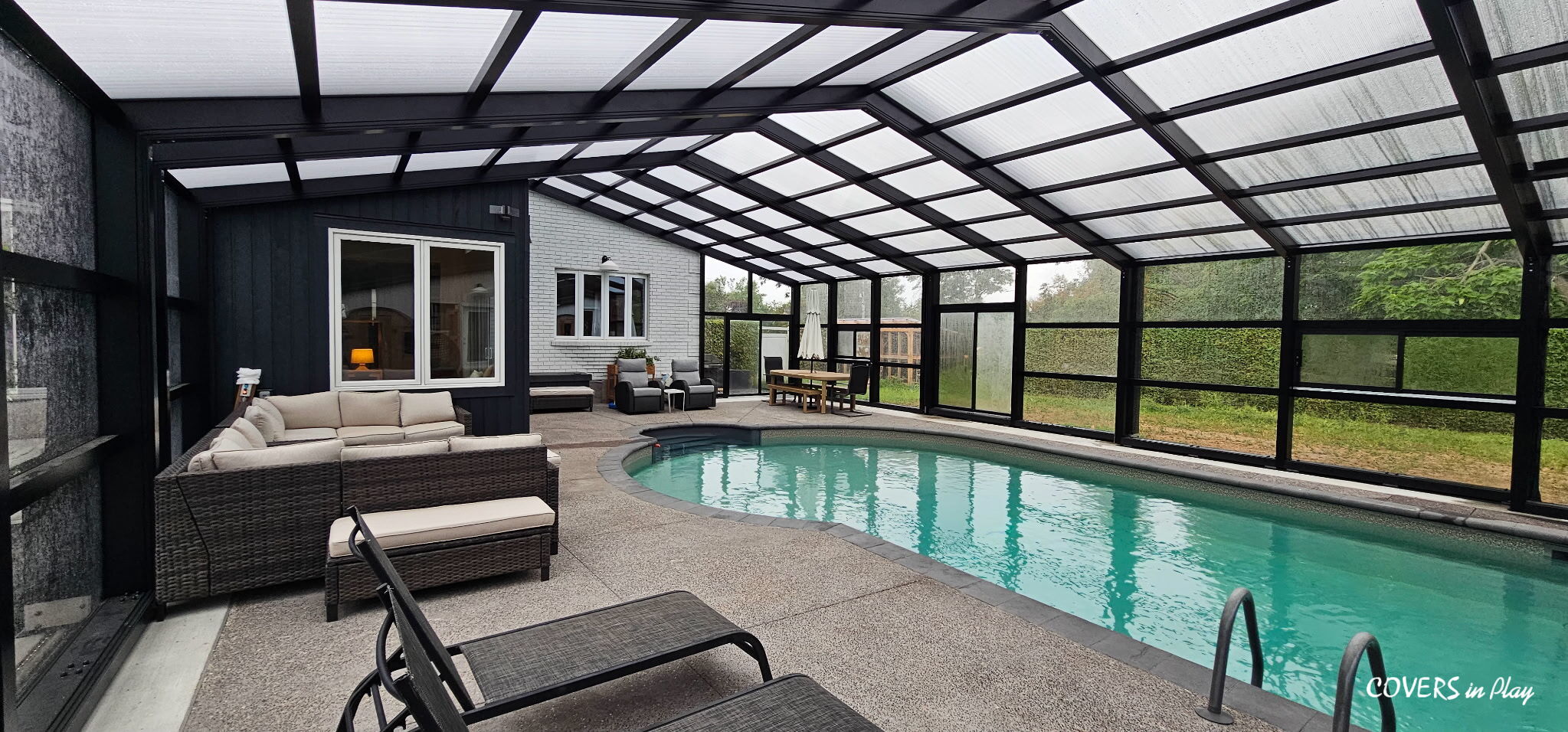
Enclosed patio with a curved indoor pool, outdoor furniture, a dining table, and large windows; clear roof and walls let in natural light.

Deck Slope and Drainage: What Changes Indoors

In most cases, indoor and outdoor pools are constructed using similar structural methods. However, one key difference lies in how the surrounding deck is designed. Outdoor pool decks are typically built with a slope that directs water away from the pool, preventing run-off and debris from entering the water. By contrast, when building an indoor swimming pool, the deck often slopes toward the pool to help manage splashing and keep excess water away from surrounding walls and finishes.

With an aluminum pool enclosure, deck slope direction becomes far less restrictive. Because the enclosure structure is engineered from durable aluminum and stainless steel components that are resistant to moisture and corrosion, exposure to water does not compromise the integrity of the system. This allows greater design flexibility when planning an indoor pool in a house.

Instead of being limited by concerns about long-term water damage, homeowners can focus on layout, functionality, and aesthetics. The enclosure materials are built to withstand humidity and water contact, creating a durable, low-maintenance pool environment without compromising structural performance over time.

Building an Indoor Pool for Easier Maintenance

One of the biggest advantages of an indoor pool in a house is simplified maintenance. Unlike outdoor pools, indoor swimming pools are protected from falling leaves, debris, dirt, and seasonal contaminants. This controlled environment helps maintain cleaner water, reduces filtration strain, and minimizes ongoing maintenance requirements.

Beyond practicality, building an indoor pool adds a level of luxury and convenience that can be enjoyed year-round. Homeowners are increasingly choosing to build indoor pools to create a private, hotel-inspired retreat within their own property offering comfort and accessibility 365 days a year, regardless of weather conditions.


Enhance Your Indoor Pool with Smart Accessoriese

Proper moisture control is essential when managing an indoor swimming pool in a house. Investing in an automatic pool cover is one of the most effective ways to reduce evaporation, conserve heat, and lower chemical usage. By limiting water loss, you can significantly reduce heating costs and overall indoor pool construction cost over time.

For ease of use, an automated pool reel system allows the cover to deploy at the push of a button in just minutes. This simple addition improves energy efficiency, enhances safety, and supports long-term cost control.

Because the cost to build indoor pool projects represents a major investment, choosing the right materials, enclosure system, and accessories from the beginning ensures durability, efficiency, and long-term performance. With thoughtful planning and expert design, an indoor pool becomes a low-maintenance, year-round wellness space built for comfort and longevity.

Frequently Asked Questions

  • How much does it cost to build an indoor pool?

  • Is an indoor pool in a house expensive to maintain?

  • Do indoor pools require a dehumidification system?

  • Can I build an outdoor pool now and enclose it later?

  • What are common indoor pool house designs?

  • Does an indoor swimming pool in a house add value?

  • What impacts indoor pool construction cost the most?

CTA Request a quote